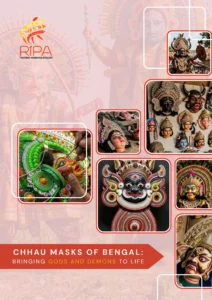
Chhau Masks of Bengal Bringing Gods and Demons to Life
Overview
The Chhau mask of Bengal is one of India’s most distinctive folk art traditions. Primarily crafted in the village of Charida in the Purulia district of West Bengal, these colorful masks are an essential part of the famous Purulia Chhau dance. The masks bring mythological characters, gods, demons, animals, and heroes to life during performances. Known for their vibrant colors, intricate designs, and expressive features, Chhau masks represent the rich cultural heritage of Bengal and showcase the remarkable craftsmanship of local artisans.
The tradition of making Chhau masks began around 150 years ago during the rule of King Madan Mohan Singh Deo of Baghmundi. Closely linked to the evolution of the Purulia Chhau dance (a martial folk dance that blends storytelling, music, and acrobatic movements). Historians believe that both the dance and the mask-making tradition developed over centuries, drawing inspiration from ancient religious festivals and local warrior customs.
The village of Charida became the center of mask-making as generations of artisan families specialized in creating masks for Chhau performers. Over time, the masks evolved from simple facial coverings into elaborate artistic creations. Today, they continue to play a vital role in preserving the stories of the Ramayana, Mahabharata, and various folk legends.
The Unique Craftsmanship
Creating a Chhau mask is a labor-intensive process that requires exceptional skill and patience. Artisans begin by preparing a clay mold, which serves as the base for the mask. Layers of paper and cloth are carefully applied and allowed to dry before being removed from the mold.
The mask is then shaped, smoothed, and decorated with bright colors. Additional embellishments such as feathers, beads, sequins, foil, and decorative crowns are added to enhance its visual appeal. Each mask is designed to reflect the personality and emotions of the character it represents. For example, gods are depicted with serene expressions, while demons often feature fierce eyes and dramatic facial features.
Cultural Significance
Chhau masks are more than decorative objects; they are powerful cultural symbols. During performances, dancers rely on body language and movement rather than facial expressions, making the masks essential for character representation.
Storytellers: The masks help audiences instantly recognize different figures and understand the narrative being portrayed.
Display Art: Beyond dance performances, Chhau masks have gained recognition as valuable works of folk art. They are displayed in museums, cultural exhibitions, and private collections across India and abroad.
Craft and Livelihood: The craft also provides a steady livelihood to numerous artisan families, helping sustain traditional knowledge and skills for future generations.
Challenges and Preservation
Despite their cultural importance, Chhau mask artisans face challenges such as declining patronage, competition from mass-produced decorative items, and limited market access. Various government agencies, cultural organizations, and tourism initiatives have worked to support artisans through exhibitions, training programs, and promotional activities. Increased awareness and appreciation of traditional crafts are essential for ensuring the survival of this unique art form.
GI Tag Recognition
A major milestone in preserving this traditional craft was its recognition under the Geographical Indication (GI) framework. The Purulia Chhau mask, officially registered by the “Chow Mukosh Silpi Sangh,” received its GI Certificate of Registration, acknowledging its unique origin, craftsmanship, and cultural significance.
This legal protection safeguards the authenticity of the masks, promotes the work of local artisans, and enhances the global reputation of this remarkable folk art. The GI tag serves as a vital step toward securing the heritage of Bengal’s Chhau masks for future generations.