
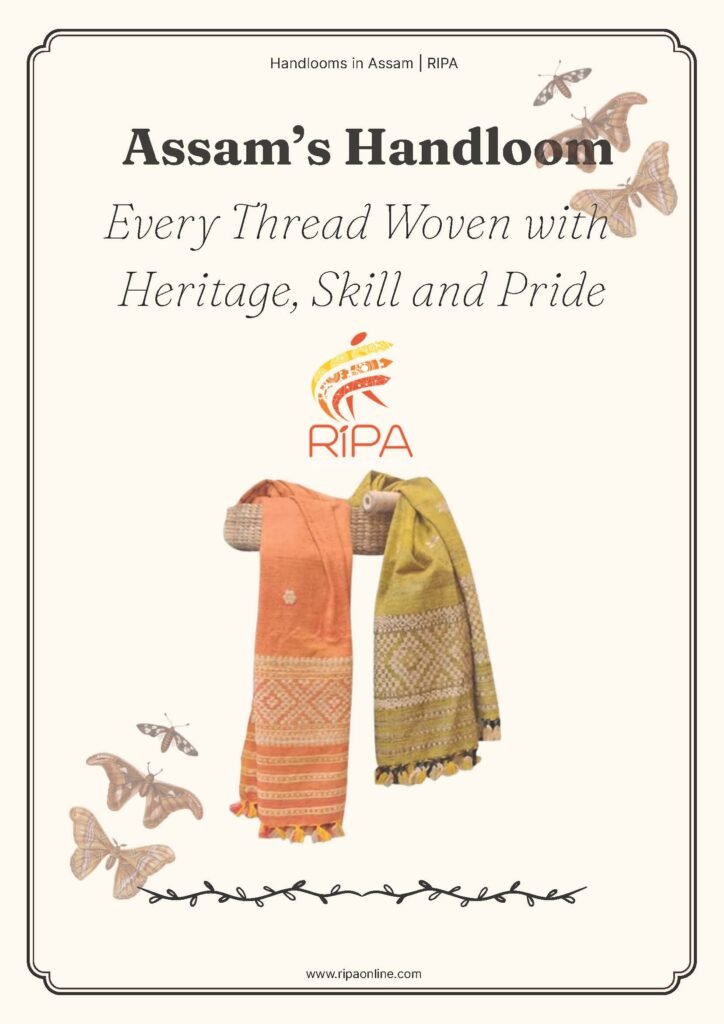
Assam’s Handloom
Every Thread Woven with Heritage, Skill and Pride
Overview
Assam Handlooms represent a rich and living tradition rooted in the cultural identity of Assam. Handloom weaving in the state is largely a household activity, traditionally practiced by women, where skills are passed down through generations. More than a means of livelihood, handloom is closely tied to everyday life, rituals, and festivals, reflecting the region’s deep respect for craftsmanship and self-reliance.
The handloom sector of Assam is especially renowned for its unique natural silks, Muga, Eri, and Pat. Muga silk, with its distinctive golden hue, is exclusive to Assam and is prized for its strength and longevity. Eri silk is valued for its soft texture and thermal comfort, while Pat silk is known for its smooth finish and elegance. Together, these fabrics form the backbone of Assamese handloom identity, used in traditional attire such as mekhela chador, gamosa, stoles, and shawls.
History of Handlooms in Assam
The history of Assam’s handloom is deeply woven into the cultural life of Assam, dating back to ancient times. References to Assamese textiles appear in early Sanskrit texts and in accounts of travelers like Hiuen Tsang, who praised the region’s fine silk fabrics. Weaving in Assam traditionally took place within households, where women played a central role, passing skills from one generation to the next.
During the Ahom dynasty, royal patronage helped the handloom tradition flourish, with fine fabrics used in court attire and ceremonial gifts. Despite challenges during colonial rule and industrialization, Assam’s handloom survived through community resilience. Today, it stands as a living heritage, blending tradition with contemporary design, representing the skill, pride, and cultural continuity of the Assamese people.
A Legacy Passed Through Generations
In Assam, weaving is traditionally practiced at home, making it an intimate and personal art. Almost every household owns a loom, and girls often begin learning to weave at a young age. Mothers and grandmothers pass on patterns, techniques, and stories, turning the act of weaving into a shared family tradition. Unlike industrial textile production, Assam’s handloom is slow, thoughtful, and deeply human. Each fabric carries the weaver’s time, skill, and emotion.
This tradition has been preserved for centuries, even though changing political and economic landscapes. While many parts of India shifted toward mill-made textiles, Assam retained its handwoven identity. The pride associated with wearing a handloom is so strong that traditional Assamese garments are still preferred for festivals, weddings, and important occasions.
The Role of Women in Weaving
Women are the backbone of Assam’s handloom sector. Weaving here is not just an occupation; it is a symbol of dignity and self-reliance. For many women, the loom provides financial independence and social recognition. A woman who weaves well is respected for her skill, patience, and creativity.
In rural areas, weaving often supports entire families. While men may work in agriculture or other trades, women contribute through textile production, sometimes selling their work in local markets or through cooperatives. This makes Assam’s handloom a powerful tool for rural empowerment.
Nature as a Design Partner
One of the most beautiful aspects of Assam’s handloom is its close relationship with nature. Weavers often draw design inspiration from their surroundings, rivers, fields, forests, flowers, and wildlife. Traditional motifs like the “jaapi” (bamboo hat), “kingkhap” (dragon), and floral patterns reflect both everyday life and ancient beliefs.
Natural dyes and fibres have historically been used, giving Assamese textiles their earthy and organic feel. Even today, many artisans prefer sustainable methods, keeping the craft eco-friendly. This connection to nature not only shapes the look of the fabric but also its philosophy, respect for the environment and balance in life.
GI Treasures of Assam's Handloom Heritage
1. Gamosa of Assam
The Gamosa is the most iconic textile of Assam, symbolizing respect, pride, and cultural identity. Traditionally handwoven in white cotton with distinctive red motifs, it is offered during ceremonies, worn in festivals, and presented to guests as a mark of honour. More than just a cloth, the Gamosa reflects Assamese values of hospitality and dignity. Every household treats it with deep reverence, and its designs often carry traditional symbols inspired by nature and heritage. The GI tag ensures that authentic Assamese Gamosa remains protected from imitation and continues to represent Assam’s living textile tradition.
2. Eri Silk of Assam
Eri silk, also known as Ahimsa silk, is one of Assam’s most sustainable and ethical handloom fabrics. The silkworm completes its life cycle before the silk is processed, making it cruelty-free. Eri silk is soft, warm, breathable, and perfect for shawls, stoles, and garments worn throughout the year. It plays an important role in supporting rural livelihoods, especially women weavers. The GI tag protects Assam’s Eri silk as a unique natural fibre known for comfort, durability, and eco-friendly production.
3. Bodo Aronai
Bodo Aronai is a traditional handwoven scarf made by the Bodo community of Assam. It is typically woven in white, red, and black colours, featuring bold geometric motifs that reflect Bodo identity, strength, and harmony with nature. Aronai is offered during ceremonies, festivals, and important social occasions, making it a symbol of respect and pride. Every design carries cultural meaning passed down through generations. With its GI tag, Bodo Aronai is now officially recognized as a protected heritage textile of Assam.
4. Muga Silk of Assam
Muga silk is Assam’s golden treasure and the only silk in the world with a natural golden shine. Produced from silkworm’s native to the Brahmaputra Valley, it is known for its strength, durability, and luxurious glow that deepens with time. Muga silk is traditionally worn in royal and ceremonial garments like mekhela chadors and sarees. The GI tag ensures that only silk produced in Assam can be sold as Muga, protecting its global reputation as one of the finest natural silks.
5. Assam Mising Handloom Products
Mising handloom products are woven by the Mising tribal community of Assam using traditional back-strap looms. These textiles include garments, shawls, and decorative fabrics known for their bold colours, stripes, and geometric patterns. The designs reflect the Mising people’s close relationship with nature and their vibrant cultural life. Handloom weaving is central to their identity and economic well-being. The GI tag preserves the originality of Mising textiles and helps artisans gain recognition and fair value for their work.
Challenges and the Road Ahead
Despite its beauty and cultural value, Assam’s handloom faces challenges. Machine-made fabrics are cheaper and faster to produce, making it harder for handwoven textiles to compete in mass markets. Many young people also move away from traditional crafts in search of modern jobs.
However, there is renewed interest in sustainable fashion, handmade products, and ethical sourcing. Designers, NGOs, and government initiatives are working to connect Assamese weavers with national and international markets. By blending traditional designs with contemporary styles, Assam’s handloom is finding new relevance among younger buyers.
Digital platforms, exhibitions, and GI (Geographical Indication) tags are also helping protect and promote authentic Assamese textiles. These efforts ensure that weavers get fair recognition and better prices for their work.
Conclusion
Assam’s handloom is more than cloth, it is history, identity, and artistry woven together. Each fabric represents countless hours of careful work and generations of inherited knowledge. When you choose an Assamese handloom product, you support not just a weaver, but an entire cultural ecosystem that values patience, sustainability, and tradition.
In a world driven by speed and mass production, Assam’s handloom stands as a gentle reminder of the beauty of slow, handmade creation. It invites us to appreciate not just what we wear, but who made it and how. And in every golden thread of Muga silk or every red motif on a Gamosa, the soul of Assam continues to shine.

REINFORCE INTELLECTUAL PROPERTY ASSOCIATION
RIPA is a Not for profit organization with an aim to promote and facilitate indigenous Intellectual Property [IP] at National and International level.
Quick Links
Contact Us
716, Seventh Floor, DLF Prime Towers, Okhla Phase 1, New Delhi-110020, India