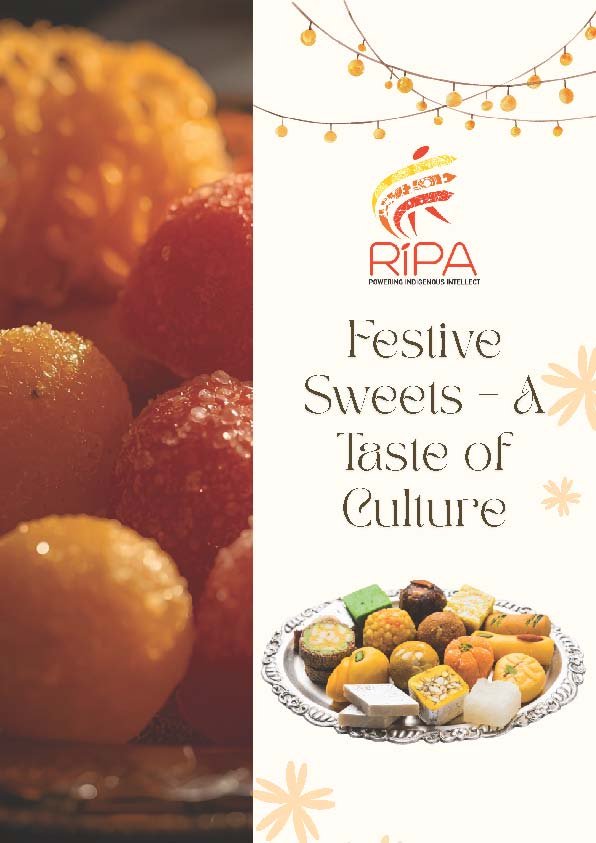
“Sweetness of Tradition, Joy of Celebration – Festive Sweets”
Overview
Not just a delicacy; Sweets are our emotions, love, and part of celebration. We may not exchange gifts, but sweets must be shared during any Indian Festivals. But have we ever thought about how deep the connection of sweets runs with our culture and traditions?
The Eternal Bond of Sweets and Festivals
Festivals are incomplete without sweets. It represents purity, happiness, and prosperity in everything from temple ceremonies to weddings, regional festivals to nationwide celebrated festivals like Diwali.
Jaggery, honey, and ghee were offered in rituals during the Vedic era (1500 BCE), this might be the earliest record of Indian sweets. After the discovery of sugarcane, India was called the “country of sugar” and as a result, countless sweet recipes were created and shared all over the world.
Diwali → Ladoos is used for religious offerings in Diwali. Soan Papdi is the most common sweet on diwali, whereas Kaju Katli counts as premium sweets.
Holi → Thandai sweets are a major part of holi celebrations, mostly people enjoy thandai and dance with joy and colors. Gujiya, Malpua is prepared for guests and relatives.
Durga Puja → Sandesh, Rasmalai is a traditional sweet from Bengal. During Durga Puja these sweets are offered to the Goddess, distributed to visitors, and consumed throughout the celebration.
Ganesh Chaturthi→ Celebrated mainly in Maharashtra, in this, a dumpling-style sweet, which is known as Modak, is prepared to offer to Ganesh ji.
Pongal → A sweet dish, Sakkarai, is prepared to celebrate the harvesting season in Tamil Nadu.
The Magic of Ingredients
Just as silk is the premium of fabrics, desi ghee, dry fruits, and pure sugar/jaggery are the luxury of Indian mithai.
Ghee brings richness & purity
Dry fruits add royalty & nutrition.
Kesar & Cardamom for divine fragrance
These ingredients represent wealth, success, and good fortune. It also offers many health benefits, which is important because sweets are generally considered unhealthy. Staples like jaggery, coconut and different flours and nuts are very common ingredients for sweets all over India. But many region has its own special ingredients, such as cucumbers (like Dhondas) in the West, winter melon (Petha) in the North, apricots (Khubani ka Meetha) in Hyderabad, ragi (Ragi Manni) in the South, and fresh oranges (Komolar Kheer) in Assam.
From Temples to Homes
Sweets and Fruits are the main religious offerings in India. Some temples have their unique sweets for offerings, such as Kara Prasadam in Golden Temple (Punjab), Tirupati Laddu in Sri Vari Temple (Tirupati), and Chak-Hao-Kheer in Sri Govindajee Temple (Imphal).
Over time, people followed the trend and started preparing sweets in their home for religious offerings and to celebrate festivals at home. Many sweets are made as per long family tradition and culture in different places all over in India.
Regional Gems of Festive Sweets
India is a treasure chest of sweets, each state adding its flavor to the festive table:
West Bengal → Rasgulla, Sandesh, Mishti Doi
Maharashtra → Modak, Puran Poli
Rajasthan → Ghevar, Mawa Kachori
Tamil Nadu → Payasam, Adirasam
Punjab → Pinni, Patisa
Kerala → Unniyappam, Ada Pradhaman
Apart from this some sweets are recognised by GI Tag for their long history, uniqueness and cultural value.
GI Cherieshed Sweets - Honouring Our Culture and History
Banglar Rosogolla (West Bengal)
A sugary treat from West Bengal, known as Rasogolla, highlights the region’s culinary tradition. Developed by Nobin Chandra Das in the 19th century, these soft spheres made from chhena and sugar syrup are celebrated for their texture and sweetness.
Odisha Rasagola (Odisha)
Odisha’s Rasagola is a distinct type of cottage cheese ball, famous for its softer texture and caramel-like brown color. The origin of rasgola remains a debatable topic for years. Many believe it originated from Odisha.
Tirupati Laddu (Andhra Pradesh)
After worshiping Lord Venkateswara at the Sri Vari Temple in Tirupathi, pilgrims receive Sri Vari laddu or Tirupathi laddu as prasadam. This tradition dates back to the temple’s founding. The laddu is the main offering to Lord Venkateswara, known as Naivedhyam.
Mysore Pak (Karnataka)
Mysore Pak is a traditional sweet dish originating from the royal kitchens of Mysore, Karnataka, India, made with gram flour (besan), sugar, and ghee. It is known for its rich, dense, and melt-in-the-mouth texture, similar to a fudge, and is a popular sweet savored during festivals and celebrations across South India.
Silao Khaja (Bihar)
Silao Khaja is a special treat from Bihar known for its crunch, fluffiness, and sweetness. Made by skilled confectioners, it comes in multiple layers and is perfect as a snack or to impress guests. Visitors to Bihar should definitely try it for its unique taste and texture.
These sweets have unique origins and qualities, such as the use of specific ingredients or traditional preparation methods, protected by the Geographical Indication (GI) tag. Many other popular sweets such as Anarsa, Tilkut, khoya lai from gaya and Peda from mathura are in the process of getting a GI Tag.
Sweet Making – From Hands to Hearts
Mithai making is as complex and creative as a craft or a masterpiece of art. The process is not just cooking; it involves many important steps, attention, and knowledge. To make a soul-pleasing mithai, the right ingredients, technique, and cooking skills are a must .
Basic Steps Are:
Selection of ingredients: Finest raw sugar, fresh milk, hand-ground spices.
Cooking with care: slow stirring, boiling, shaping.
Finishing: garnishing with saffron strands, silver leaf, and almonds.
Mithai makers (halwais) are the unsung heroes of festivals, keeping alive centuries-old recipes. Some sweet recipes are surviving today only because of our culture and festivals.
Sweets in Modern Celebrations
Traditional sweets are still dominating and can’t be compared to today’s modernised sweets. Modern twists, sweets like chocolate barfi, fusion cakes, and sugar-free laddoos have emerged for younger generations. Yet, the soul of festive sweets remains unchanged.
Even globally, Indian mithai is making its mark at weddings, international food fairs, and stores in cities like London, Dubai, and New York.
Why Festive Sweets Remain Irreplaceable
“Kuch meetha ho jaye” is the most common phrase we use during any greeting or celebrations. This proves how sweets have become a part of our everyday lives.
During Festive seasons, markets are flooded with sweets, every sweets shop is decorated with a big colorful shed, and long queues of shoppers wait to get their favourite sweets for celebrations. This sudden growth of consumers in the market benefits most of the business,including businesses dealing in sweets. Every year these businesses wait for festivals, to earn extra profit. When something becomes so valuable for our businesses and the economy of the country., it won’t be replaceable. Unlike modern desserts, festive mithai holds culture, blessings, and nostalgia.
Conclusion – A Bite of Heritage
Sweets are a blessing wrapped in the flavours of every corner of this country. It’s part of our culture, a culture that represents us worldwide.
Passing a mithai box to neighbors or exchanging sweets during festivals is not just a gesture; it’s a tradition that showcases our unity and bonding.
FAQs
1. Why are sweets so important in Indian festivals?
Festivals means celebration, and to celebrate we organise feasts. We need sweets to perform our rituals during festivals, we need sweets to celebrate our joy during festivals, we need sweets to complete our feasts during festivals. The necessity of sweets makes it very important to us in festivals.
2. Are festive sweets healthy?
Most sweets are full of sugar, but many sweets are fused with dry fruits, seeds and other healthy ingredients like jaggery, ghee and milk and dry fruits.
3. Which sweets are most popular during Diwali?
Ladoo, barfi, kaju katli, gulab jamun, and soan papdi are the most common Diwali sweets.
4. Are there regional variations in festival sweets?
Yes, India’s variety is evident in its sweets, such as Bengal’s Sandesh, Karnataka’s Mysore Pak, Agra’s Petha, and Maharashtra’s Modak.
5. Are GI-tagged sweets available in India?
Yes, many sweets have GI tags, such as Tirupati Laddu, Dharwad Peda, and Banglar Rasogolla, which certify their authenticity.