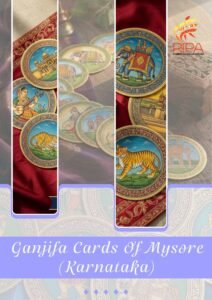
Step into the world of Mysore Ganjifa cards –a fascinating blend of history, art, and storytelling that’s survived centuries. These hand-painted, circular playing cards have their roots in the 16th-century court of the Wadiyar dynasty. Each card is a miniature masterpiece, often depicting scenes from Indian epics like the Ramayana or the Dashavatara, brought to life with vibrant natural dyes, shimmering gold foil, and intricate gesso work.
History
The earliest references to Ganjifa cards date back to the 15th century. Though widely associated with the Mughal era, the tradition is believed to have originated in Persia. The historian Ibn Taghribirdi recorded a Mamluk sultan playing a game called kanjifa, the medieval Arabic term for Ganjifa.
It is thought that the game arrived in India with the Mughals, as supported by a journal entry from 1527 written by Babur. Additional details of the game’s play are found in the Humayun-nama, authored by Gulbadan Begum. Over the centuries, regional styles emerged, with Mysore gaining renown for its exquisitely painted Ganjifa cards, which incorporated Indian mythological themes and local artistic traditions.
Some distinctive features that make Mysore Ganjifa special:
Handcrafted Process: Artisans in Mysore craft ganifa cards with remarkable skill, layering paper or cloth by hand. Each card is meticulously polished and then painted using natural pigments, resulting in vibrant and unique works of art.
Circular Shape: Unlike modern rectangular playing cards, Mysore Ganjifa cards are traditionally round in shape.
Influence from Hindu Mythology: Many sets depict Dashavatara and other mythological stories, making each card meaningful.
Intricate Miniature Painting: Ganifa cards feature fine detailing; each card reflects the miniature painting traditions of Karnataka.
Limited Artisan Production: The craft survives through a small community of skilled artisans who preserve traditional methods.
Gameplay
Ganjifa is a trick-taking card game, somewhat similar in concept to games like rummy or bridge but with its own traditional rules. A typical set contains multiple suits, each representing a theme or deity.
Players are dealt cards, and the objective is to win tricks by playing higher-ranking cards of the same suit or a designated trump suit.
The ranking of cards often follows a traditional order, and players must remember symbols and suits to play strategically.
Rules may vary depending on the region and type of Ganjifa set, especially in Dashavatara Ganjifa, where each suit represents one incarnation of Lord Vishnu.
Art as a Souvenir
Today, Ganjifa cards are not only used for playing but are also admired as collectible art. Tourists and collectors value them for their vibrant colors, storytelling, and craftsmanship. Many sets are framed or displayed as decorative pieces, turning a traditional game into a work of art.
GI Recognition and Protection
Mysore Ganjifa cards have received Geographical Indication (GI) recognition, helping protect the authenticity of the craft and supporting local artisans. The GI tag ensures that traditional techniques, materials, and regional identity are preserved, keeping this rare and beautiful heritage alive for future generations.