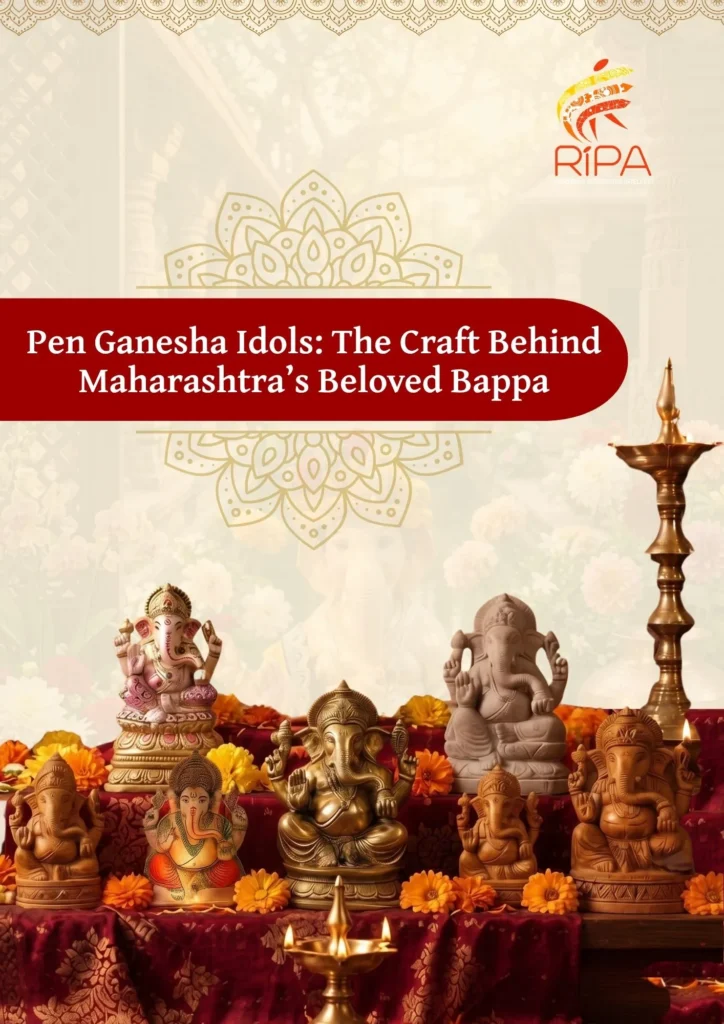
Pen Ganesha Idols: The Craft Behind Maharashtra's Beloved Bappa
Overview
As Ganesh Chaturthi approaches, homes, pandals and streets across Maharashtra begin preparing to welcome Lord Ganesha. Among the many places associated with this beloved festival, Pen in Maharashtra’s Raigad district holds a special place.
Known as one of the country’s most important centres for Ganesha idol-making, Pen comes alive months before Ganesh Chaturthi. Skilled artisans work day and night to create thousands of beautifully crafted idols, continuing a tradition that has been passed down through generations.
A Tradition Rooted in History
The tradition of making Ganesha idols in Pen has been carried forward for generations. What began as a local craft gradually developed into a major industry, with the skills of sculpting and painting being passed from parents and grandparents to younger generations.
Pen and the surrounding villages, particularly Hamrapur, are now widely recognised for their Ganesha idols. Every year, idols made by artisans here travel far beyond Maharashtra, finding their way into homes and public celebrations across India.
The craft is not simply a means of livelihood for these families. For many artisans, Ganesha idol- making is a part of their cultural identity and heritage.
Creating a Ganesha idol is a detailed process that requires patience, precision and artistic skill.
● Sourcing the Earth: Preparing the sacred shadu mati (natural clay). ● Shaping Divinity: Structuring the physical frame and core proportions. ● Ornate Artistry: Carving intricate jewelry, traditional attire, and crowns. ● The Sacred Gaze: Bringing Bappa to life by painting the eyes with absolute precision. ● The Divine Awakening: Witnessing the final transformation into a beautifully painted deity.
More Than Just an Idol
For devotees, a Ganesha idol is not merely a decorative object. It represents the presence of Lord Ganesha, the remover of obstacles and the deity associated with wisdom, prosperity and new beginnings.
During Ganesh Chaturthi, families bring Ganesha idols into their homes with great devotion. The idol becomes the centre of prayers, aartis and celebrations before being ceremonially immersed during visarjan.
For the artisans of Pen, however, the idol carries another meaning. It represents their heritage, livelihood and generations of craftsmanship.
The Significance of Pen’s Ganesha Idols
The popularity of Pen Ganesha idols has made the town an important part of Maharashtra’s cultural landscape. The craft connects faith, art, tradition and livelihood in a unique way.
With growing awareness about environmental concerns, many artisans are also focusing on eco-friendly clay idols that are more suitable for natural immersion.
In 2024, Pen Ganesha idols received a Geographical Indication (GI) tag, giving formal recognition to the distinctive traditional craft associated with the region.
As Bappa Comes Home
When Ganesh Chaturthi arrives and devotees bring their Bappa home, they may see only the finished idol. But behind that smiling face are days and months of work, generations of knowledge and the hands of artisans who have dedicated themselves to keeping the tradition alive.
This Ganesh Chaturthi, as we celebrate Bappa, it is also worth remembering the craftsmen of Pen, the people who transform clay into a symbol of faith, devotion and joy.
Because every pen ganesha idol is not just made by hand; it carries a tradition.