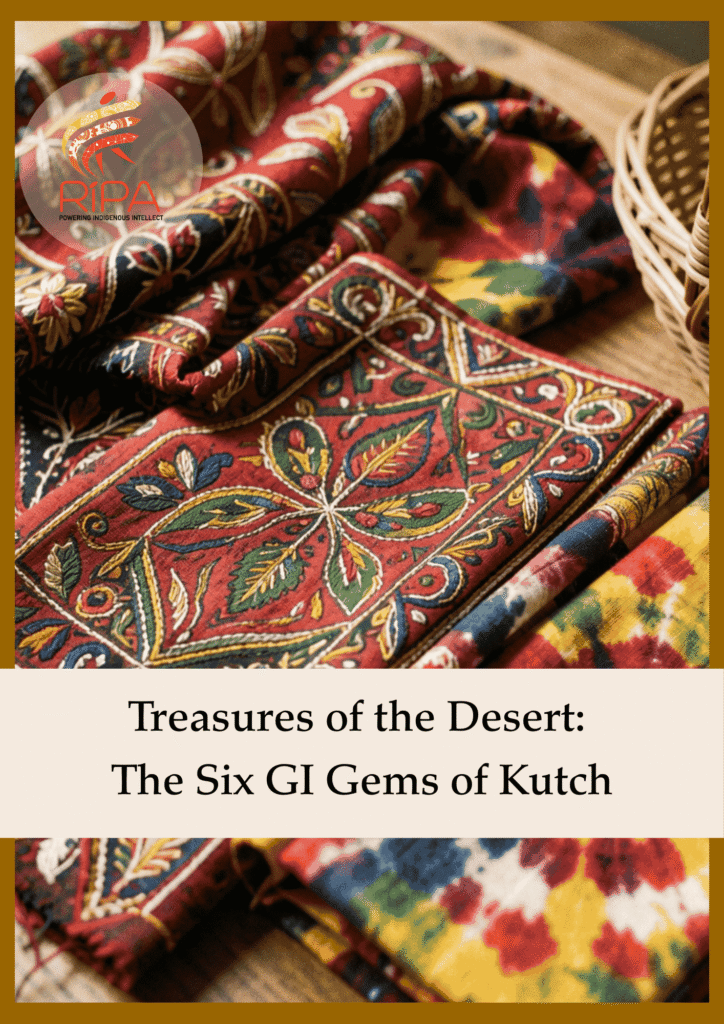
Kutch, a vast region in Gujarat known for its salt deserts and resilient communities, has nurtured extraordinary craft traditions for centuries. Harsh climate, geographic isolation, and historic trade routes shaped a culture where people turned limited resources into remarkable artistry. Over time, many of these crafts gained Geographical Indication (GI) recognition, preserving their authenticity and ensuring that the skills of local artisans are valued and protected.
Kutch’s Rich Craft History
The craft heritage of Kutch is deeply connected to everyday life. Communities developed weaving, dyeing, embroidery, and food-processing traditions not just for trade but also for identity and survival. Techniques were passed down through generations, each family preserving patterns, tools, and methods that made their work distinctive. Today, these traditions stand as living proof of how culture and environment can shape craftsmanship.
Kutch represents one of the richest clusters of GI crafts in India. Renowned for their handcrafted excellence. Several qualities define the crafts of Kutch:
One-of-a-kind craft techniques refined over generations
Strong link to local geography, climate, and available materials
Limited production, ensuring authenticity and exclusivity
Mastery of hand skills, with minimal industrial involvement
Cultural identity in every product, reflecting communities and traditions
GI Gems from Kutch
Kutch Ajrakh
Ajrakh is a centuries-old block-printing tradition known for its deep indigo and madder red tones. Using natural dyes and intricate wooden blocks, artisans create symmetrical geometric patterns that require multiple stages of dyeing and washing.
Kutch Embroidery
Kutch embroidery is famous for vibrant threads, mirror work, and highly detailed motifs. Each community, Rabari, Ahir, Meghwal, and others, has its own style, making every piece a story of identity and heritage.
Kachchh Shawls
Handwoven Kachchh shawls are known for their fine weaving and subtle traditional patterns. Made using wool or cotton, they combine warmth, durability, and timeless elegance.
Kutch Rogan Craft
Rogan art is one of the rarest textile arts in the world. Artists paint on fabric using a thick, castor-oil-based pigment, creating elaborate floral and “Tree of Life” designs entirely by hand.
Kutch Bandhani of Gujarat
Bandhani, also known as tie-and-dye, is a traditional textile art that involves tying thousands of tiny knots on fabric before dyeing it. This intricate process creates delicate dotted patterns, each unique to the artisan’s technique.
Kachchhi Kharek
Kachchhi Kharek refers to premium dried dates produced in the region. The unique climate of Kutch contributes to their taste, texture, and quality, making them a recognized GI agricultural product.
GI Recognition and Protection
GI recognition plays a vital role in safeguarding traditional knowledge. It ensures that only products genuinely made in the region using traditional methods can carry the name. This protection helps artisans receive fair value, prevents imitation, and preserves cultural heritage for future generations.
Gujarat has a long list of GI-tagged products, and small regions like Kutch contribute significantly. As of 2025, more than 25 GI-registered products from Gujarat cover handicrafts, handlooms, agricultural products, and other traditional goods, with several more under consideration.